In 1892, three black men, Thomas Moss, Calvin McDowell, and Will Stewart, were lynched because their successful business threatened the local white-owned store. Their lynching was a result of the prosperity of their store “taking away customers” from the white-owned store, and the defiance of white economic interests.
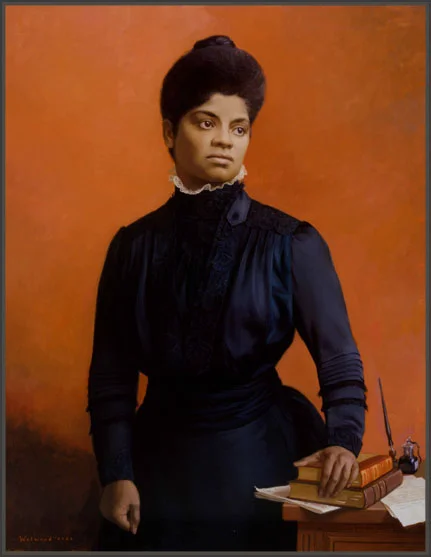
Here is where their friend, Ida. B Wells saw the injustice of the lynching and took it upon herself to investigate and speak out against the injustices of lynching. She also wrote and spoke out about racial injustice. Her impact on the Civil Rights Movement was revolutionary, as she pioneered investigative journalism, spoke out against racial injustice, and made people aware of what was happening in the South.
Ida was born as a slave in Mississippi, but was freed as an infant as a result to the Emancipation Proclamation. Ida was one of the eight children that her parents had. Then when she was just 16, the yellow fever epidemic claimed the lives of one of her brothers and both of her parents. Following the death of her parents, Ida struggled to keep her family together and had to quickly find a job to help support them. With the help of some relatives, like her paternal grandmother, she was able to keep her family together and got a job a teacher.
After her grandmother passed away, her and her younger sisters decided to move to Memphis, Tennessee where she got another job as a teacher in Woodstock. It was in Tennessee where she met her three friends, who owned a store called People’s Grocery.
Before the lynching of these three men, a skirmish occured between two little boys playing a game of marbles in front of their grocery story. This little skirmish caused a violent outrage from the neighboring grocery store, and eventually lead to the lynching of these men.
This started Ida’s journey of writing and speaking out about lynching. She started to investingate earlier lynchings that hapened, and interviewed peopole about the occurrences of these lynches.
“One had better die fighting against injustice than die like a dog or a rat in a trap”.– From her autobiography Crusade for Justice
She was co-owner of the newspaper Free Speech, which was a newspaper based in Memphis, Tennessee.
In May of 1892 she realsed a article talking about a black man that was accused of raping a married white women. This article angered many people eventually leading to a mob ransacking the office of Free Speech, destroying the building and everything in it.
Ida was out of town during this, and never returned to her home in Memphis. She moved to Manhattan, and accepted a job in the New York Age, and continued her to speak about anti-lynching.
In 1892 while she was still living in New York, Ida wrote and published her first book: Southern Horrors, and it was talking about the lynching of many balck men and the reasons for their lynching in the South and speaks about the injustices of these events.
“It is with no pleasure I have dipped my hands in the corruption here exposed. Somebody must show that the Afro-American race is more sinned against than sinning, and it seems to have fallen upon me to do so.” – from The Southern Horrors
Some time later, she also wrote another book called A Red Record, a 100-page pamphlet of sociological investigation of lynching in the United States since the Emancipation Proclamation of 1863. It covered black people’s struggles in the South since the Civil War and the racism that was constantly faced in the South.
She later married Ferdinand Lee Barnett who had 2 sons of his own. The pair of them shared the same commitment to fighting for civil rights.
She also helped to co-found NAACP ( National Association for the Advancement of Colored People). She contributed essential evidence of southern racial violence, which helped to create the radical anti-lynching mission. This organization also strongly advocated for equal voting rights as well as social, economic, and educational rights for all.
Her impact on the civil rights movement was huge. Her work of exposing the racial and policital motivations behind lynching through data and investigation inspired anti-lynching campaigns and grassroots activism in the 1950s.
By exposing the racial injustices and the brutality of the Jim Crow Laws to extended audiences, she showed white Americans the reality of southern violence, and laid the groundwork for federal civil rights advocacy.
Ida B. Wells had a massive impact and was a foundational figure in investigative journalism. She was a very powerful journalist in her time, who fought for what she knew was right.
She spoke out about racial violence and was a great civil rights activist for her entire life. She paved the way for modern day civil rights movements with her influence and actions in her time.
Sources- Ida B. Wells