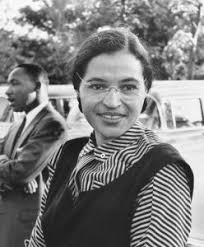
Rosa Parks is one of the most important figures in America. Rosa Parks is remembered for her bravery during the Civil Rights Movement, but her impact goes beyond one moment on a bus. Her life was shaped by courage, determination, and a strong belief in equality.
Rosa Parks was born on February 4, 1913, in Tuskegee, Alabama. She grew up during a time when segregation laws in the South separated Black and White people. These laws affected schools, transportation, restaurants, and almost every part of daily life.
As a child, Rosa saw unfair treatment around her. She went to a separate school for black students, which often had fewer resources than white schools. Even though life was difficult, her mother and grandparents taught her to value education and self-respect. She later attended Alabama State Teachers College for Negroes but had to leave before graduating to take care of her sick grandmother and mother.
In 1932, she married Raymond Parks, an activist during the Civil Rights Movement. Through him, she became more involved in fighting for equal rights. Rosa Parks joined the NAACP (National Association for the Advancement of Colored People). She worked as a secretary for the local chapter in Montgomery, Alabama.
Before the famous bus incident, she was already helping investigate cases of injustice against Black Americans. She worked quietly but strongly behind the scenes for many years.
On December 1,1955, Rosa Parks was riding a bus in Montgomery. When the bus became crowded, the driver told her to give up her seat to a white passenger. But because of her refusal to get up, she was later arrested.
Her arrest led to the Montgomery Bus Boycott, where Black residents refused to ride city buses for over a year. A young pastor named Martin Luther King Jr. helped lead the protest. In 1956, the U.S. Supreme Court ruled that bus segregation was unconstitutional.
One of Rosa Parks’ most well-known quotes is: “I have learned over the years that when one’s mind is made up, this diminishes fear.” This quote shows that her bravery came from a strong belief, not anger.
After the boycott, Rosa Parks and her husband faced threats and lost their jobs. They later moved to Detroit, Michigan, where she continued fighting for civil rights. She worked for the U.S. Representative John Conyers and stayed active in the movement for many years. In 1996, she received the Presidential Medal of Freedom, one of the highest civilian honors in the United States
Rosa Parks’ story reminds students that change does not always come from loud actions; sometimes it comes from calm courage, and her life shows that young people and ordinary citizens can stand up against unfair rules.
Rosa Parks’ life shows that courage does not always have to be loud. She stood firm in her beliefs and helped change history. During Women’s History Month, remembering Rosa Parks encourages students to stand up for fairness, treat others with respect, and use their voices to make a difference in their own communities.
More information
National Archives – Records on the Montgomery Bus Boycott
History- Biography of rosa parks
NAACP – Historical background on civil rights activism