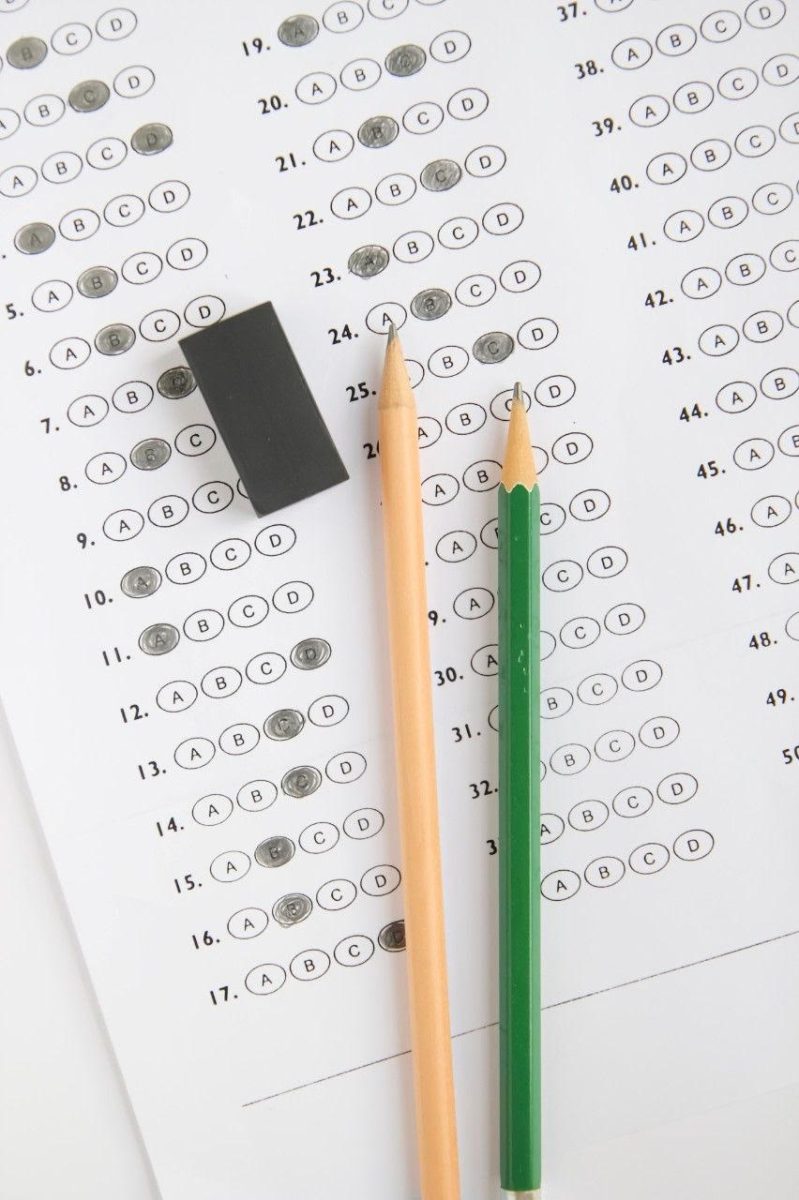
Failing a test is a universal experience. Almost everyone who has been in school has failed a test, quiz, or assignment. You may have failed even though you studied super hard, or you may not have studied at all. The most irritating part about failing is not knowing what you did wrong. That’s why some teachers offer test corrections, which allow students to answer the questions they got wrong and explain why their previous answers were incorrect. Yet, some students and teachers wonder if test corrections are genuinely beneficial.
Test corrections are offered in various ways. Sometimes, they allow students to earn points back, receive extra credit, or have a learning experience that highlights areas for improvement.
Lakeside senior Matthew Bui appreciates test corrections, calling them “good for teaching you the material” and “helpful for passing the test I failed.” These opportunities help students understand their mistakes and allow teachers to focus on practice that addresses their weaknesses. When students review their errors, they strengthen their learning and are less likely to repeat the same mistakes.
Dr. V, the AP Physics teacher, uses test corrections to identify common areas of misunderstanding and adapt his instruction to support students better. This results in a more responsive and effective learning environment.
However, some, like Rimna Siye, a sophomore at Lakeside, argue that test corrections can lose their value in a school environment where AI is readily available. She points out, “Some aren’t learning from their mistakes if they are just using AI to correct them.” When students rely solely on AI to fix their errors, they risk missing out on fundamental understanding and may ultimately fall further behind in the course. Rimna also notes that at times, “you’re just grabbing at straws” because some teachers only allow students to use their notes for test corrections. Rimna suggests that teachers let students ask questions about their errors and review the test or similar questions in class.
On top of that, test corrections can take up a lot of time for both teachers and students. Fazzela Jamil, a Lakeside senior, says her test corrections for AP Microeconomics were almost 20 pages long. Many teachers require students to write detailed responses, which can make the process feel overwhelming. Even Ms. Kriger, the AP Microeconomics teacher, admits that grading these corrections takes a long time.
Still, teachers like Ms. Kriger, Ms. Anderson, and Dr. V believe this extra effort is worth it. They argue that by making students really think about their mistakes and explain their answers, test corrections help prevent shortcuts, such as relying on AI, and encourage students to learn from their errors.
Test corrections come with both challenges and perks. They are time-consuming and are sometimes misused, but they also give students a real opportunity to learn from their mistakes. If students view test corrections as a chance for reflection and growth rather than just another assignment or a way to get points back, they can improve their education and mindset. Mistakes are universal; children, teens, and even adults make mistakes, but the real lesson is what you do with those mistakes. You can choose to ignore the errors or take responsibility and work towards progress.