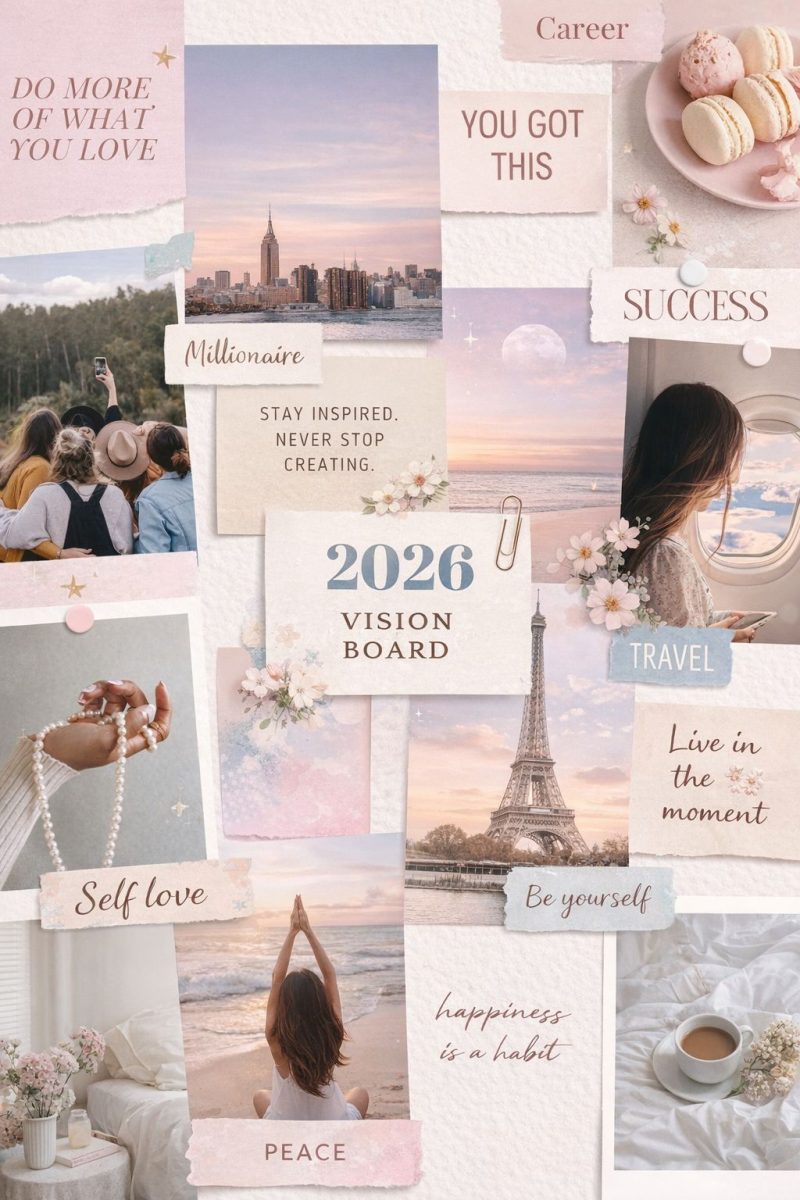
Vision boards have been around for years, but their popularity keeps growing for one simple reason: they help people focus. According to psychologists who study goal setting, visual reminders can strengthen motivation by keeping goals a priority. A strong vision board doesn’t promise magic. It builds clarity.
Step 1: Get clear before you get Creative
Ask yourself what you truly want next year. Think about these categories: school, health, relationships, hobbies, and personal growth. Writing these down first matters because a study published by the Dominican University of California found that people who write goals are more likely to achieve them than those who don’t. Your vision board should reflect intention, not trends.
Step 2: Choose your format
Vision boards can be physical or digital. A physical board uses poster board, magazine clippings, photos, and markers. A digital board can be made using apps or slides and set as a phone or laptop background. Choosing the format will help you to see a clear vision of your board, and visibility is key.
Step 3: Focus on feelings, not just things
Many people make the mistake of only adding objects, like a car, money, or a dream house. Instead, include words and images that represent how you want to feel, like confident, calm, motivated, or proud. If your goal is a better grade, add an image of a focused workspace or a word like “discipline.” This connects your goals to emotions, which strengthen commitment.
Step 4: Use specific & realistic goals
Dream big but stay grounded, and instead of “be successful,” try “earn honor roll” or “practice soccer three times a week.” Specific goals are easier to act on and measure. A helpful trick is pairing images with short affirmations written in the present tense, such as “I manage my time well” or “I show up prepared.”
Step 5: Arrange with purpose
Where you place the image matters. Put your most important goal in the center and surround it with supporting habits and reminders. This visual structure reinforces priorities. Don’t overcrowd the board; white spaces help your brain focus.
Step 6: Revisit and Reflect
A vision board isn’t a one-day project; it’s a living tool. Look at it daily, even for thirty seconds. Once a month, reflect on and see if your goals are still accurate. Do you need updating? Teachers often encourage students to review goals regularly because reflection builds accountability.
Step 7: Take action
A vision board works best when paired with effort. Break big goals into small steps and start with one action today. Motivation grows from movement, not waiting.
In the end, a vision board isn’t about predicting the future. It’s about choosing it when you picture your goals clearly and commit to them daily, you turn vision into direction and direction into progress.