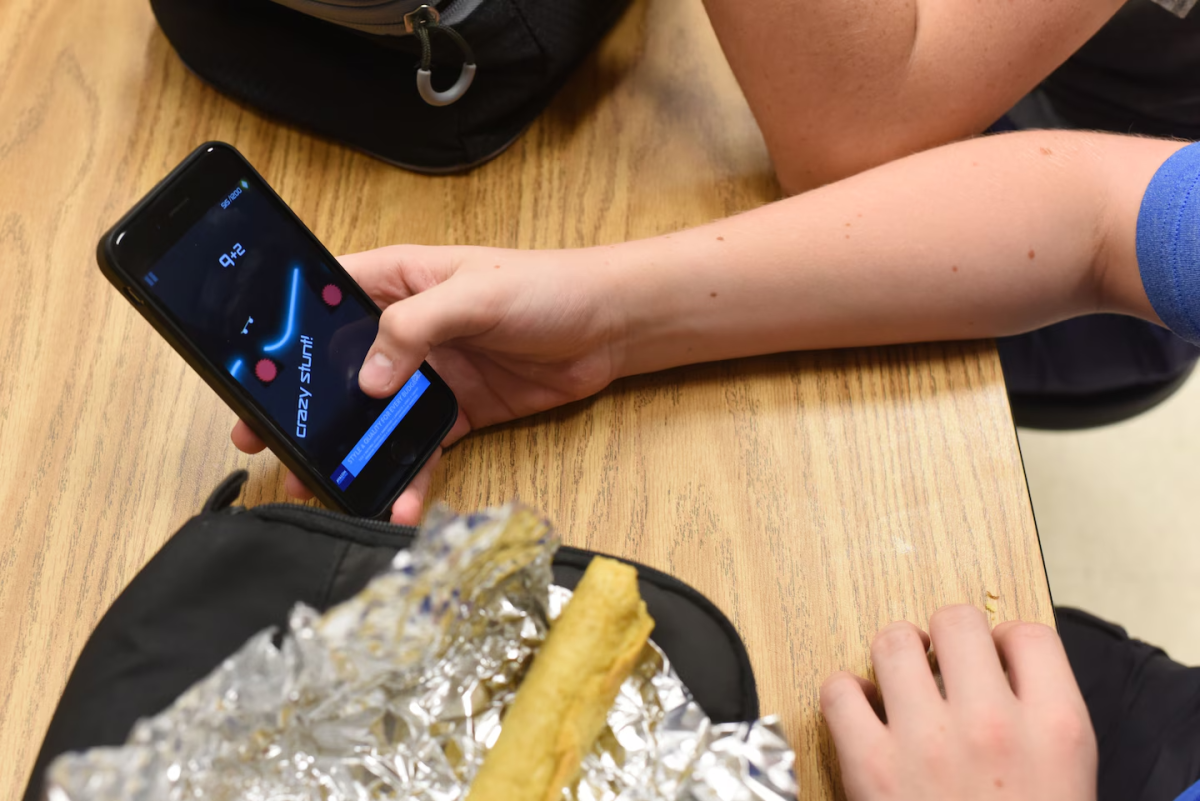
The question of permitting cell phones in schools has been a debilitating problem across the globe, as access to technology continually grows.
For Lakeside High School, the no-phone policy has been the greatest source of frustration for students.
While the Georgia school maintains this no-phone policy throughout the day, a growing number of students are advocating for a change, arguing that the restrictive rule should be relaxed, at least during lunch. They believe that allowing phones during this designated free period would not only enhance their social experience but also acknowledge their maturity and ability to self-regulate.
For Vikings students, lunch time is not solely dedicated to lunching, but also to a good social break. However, the no-phone policy, to ensure face-to-face interaction, has generated a shocking unintended effect.
Sophomore Makayla Swinney states, “We should at least have the option of using our phones during lunch, because it just gets more awkward and weird when we don’t. We’re high school students, and we’re responsible enough to know when to and not to use our phones.”
The DeKalb County School District believes the policy decreases distraction, prevents cyberbullying, and discourages cheating. The National Center for Education Statistics surveyed and found that more than half of public school administrators say cell phone use hurts academic achievement.
While these survey results are more than tolerated and enforced, students complain that lunch should be an exception. It’s a time to unwind and treat oneself, not restrict. Maintaining the no-phone policy during lunch sends a message to students that school is controlling and not supportive of their growth.
Senior Jules Morton expressed the frustration of being too coddled. “I wish they would allow us to use our phones at school,” he states. “I feel like we should be able to be more open than our teachers allow us. Most of us are almost adults and can handle phones during lunch. It’s like the Lakeside administration is attempting to hold us back, and most times it doesn’t work, during lunch at least. It’s only teaching us to be sneakier.”
His words ring true in many students’ minds; the rule is a control measure and not theirs. This creates tension that can be dissipated by added trustworthiness.
Most Americans support a ban on class phones, but fewer, only 36%, support a total-day ban during lunch and other periods away from classes, based on a Pew Research Center survey in 2024. The numbers show that the Lakeside students have a wider national outlook.
The policy also denies children access to valid uses of the phones, such as contacting parents in the event of a change in after-school schedules or paying cell phone fares through the vending machines. The parents would like to have the kids near the phone in case something happens, and an all-day ban deprives them of the security.
This appeal for change is not an appeal for anarchy, but for faith and flexibility. Students think that the blanket ban belittles their maturity and feels they are not responsible enough to possess a tool essential to today. Students convey that allowing phones at lunchtime would be a good step in the teacher-student dynamic. It will show that technology, when used responsibly, can provide connectivity and convenience and not necessarily distraction.
A policy shift for Lakeside High School would create a shared sense of responsibility. Granting students independence during their lunch time will encourage the use of self-regulation, an ability required for success post-high school.
The question is not if phones are bad or good, but how to create a school culture that is trusting enough to permit students to move through the world today more independently.